Vegetable Breeding and Genetics
Advancing technologies to address threats to vegetable production in Texas and beyond
Conventional and modern methods for resilient vegetable production in Texas

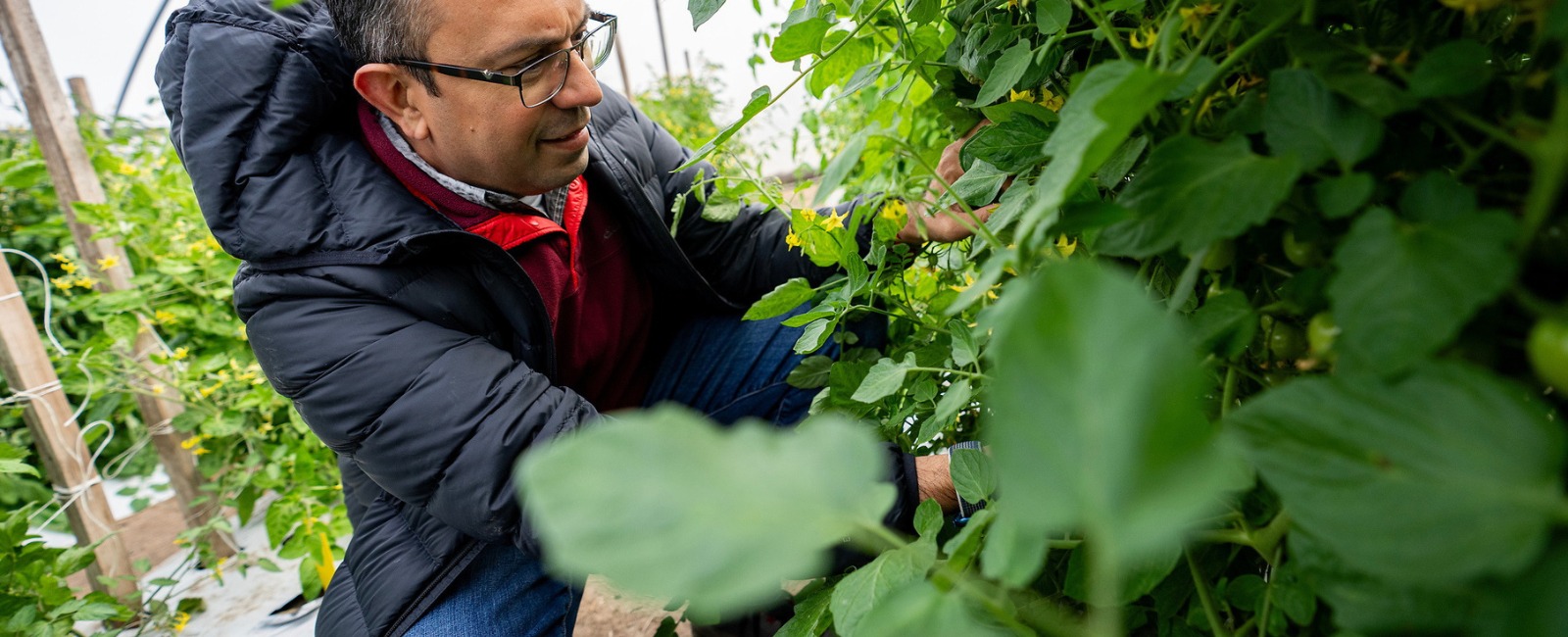
Growing vegetables in the subtropical climate of South Texas represents a real challenge due to its harsh environmental conditions and high pressure of endemic, or new, pests and diseases that severely limit production.
The vegetable-breeding program is combining conventional breeding and modern molecular methods to develop high-yield, heat-tolerant, disease- and pest-resistant, high-quality tomato and spinach germplasm.
The breeding program is located at the Texas A&M AgriLife Research & Extension Center, Weslaco, Vegetable Research and Education Center Building, TX a recently opened facility that includes a dedicated molecular biology laboratory, a greenhouse, and land field for conventional and molecular breeding. New cultivars are being developed by combining genomics, transcriptomics, and metabolomic tools.
Program faculty and staff
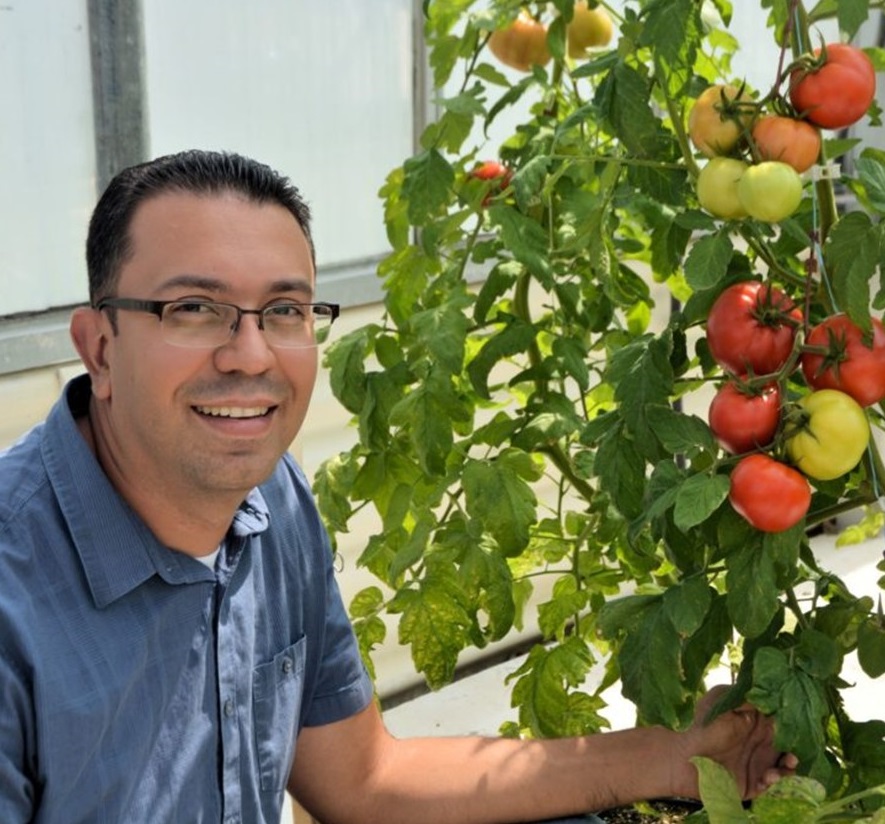
Dr. Carlos A. Avila
Associate Professor, Principle Investigator | Texas A&M Department of Horticultural Sciences, Texas A&M AgriLife Research
Lab members
Expand current members
- Jana Jeevan Rameneni, PhD
Associate Research Scientist
Projects: Tomato Quality and Post-Harvest Shelf Life
Email: [email protected] - Raja Raja Sekhar Srungarapu, Ph.D.
Postdoctoral Research Associate
Projects: Disease resistance in Spinach, Vitamin C content in Spinach
Email: [email protected] - Amo Aduragbemi
MSc Graduate Student
Project: Tomato Quality and Post-Harvest Shelf Life
Email: [email protected]
- Ada Muñoz, BSc
Research Associate
Email: [email protected] - Anaizar Garza, BSc
Research Associate
Email: [email protected]
Former lab members
Expand members
- ASM Faridul Islam, PhD
Post-Doctoral Research Associate
Projects: Spinach seed for grain, Spinach water-use efficiency - Devi Kandel, PhD
PostDoctoral Research Associate
Projects: tomato fruit quality traits, TYLCV resistance in tomato, high-throughput phenotyping in tomato - Dario Rueda-Kunz, BSc
MSc. Graduate Research Assistant
Projects: Enhancement of Ascorbic acid in spinach, Salt Stress tolerance in Spinach - Samantha Serna
Ag Research Worker - Elizabeth Solano
Student worker – Summer 2021 internship
Undergraduate Student, Texas A&M – Kingsville - Henry O. Awika, PhD
PostDoctoral Research Associate
Projects: Disease resistance in Spinach (White rust and Anthracnose), Nitrogen- and water-use efficiency in spinach, high-throughput phenotyping in Spinach
- Gerleene Acuna, BSc.
Lab Technician, Chemical Composition Analysis - Alexandra Hernandez
Ag Research Worker - Estephanie Bernal, MSc
Lab technician - Leticia Rodriguez
Ag Research Worker - Alondra Menchaca
Ag Research Worker - Thiago G. Marconi, PhD
Research Associate - Sonia delRio, PhD
PostDoctoral Research Associate - Zenaida Viloria, PhD
PostDoctoral Research Associate - Julianna Kurpis, MSc.
Lab Technician
Research

Characterization of novel tomato fruit firmness that conserves flavor and nutritional quality
Expand details
Development of tomatoes that are flavorful and nutritious yet firm with long shelf life is the holy grail in tomato improvement. So far, tomato genes that inhibit ripening have been successfully used to improve firmness and shelf life. Unfortunately, this approach has negatively affected flavor, and nutritional value. As a result, it is generally accepted that most modern tomato cultivars have lost their flavor reducing consumption and supermarket sales. The vegetable breeding program at Weslaco identified a new trait for fruit firmness in tomato conserves good flavor and quality since the ripening process is not inhibited. Impact: TAM-SP18-157 reaches an average compression peak of 1.571 kilograms force (KgF), with fruits 70% more firm as compared to the average firmness in the population (0.92 KgF). TAMU trait that can be used to substantially improve fruit flavor and shelf-life characteristics, meeting both consumers’ and retailers’ demands on fruit quality.

Development of tomato yellow leaf curl virus resistant cultivars
Expand details
The main disease affecting tomato production in South Texas is the tomato yellow leaf curl virus (TYLCV), which is vectored by whiteflies. Several major resistance genes for TYLCV have been identified, but they need to be introgressed and stacked into locally adapted cultivars to ensure long-lasting disease resistance. Current efforts of the breeding program are focused to introgress resistance genes into heat-tolerant breeding lines. Marker-assisted selection is being used to increase selection efficiency by allowing us to only evaluate plants carrying the resistance gene(s) in the field.

Development of molecular tools for disease resistance selection in spinach
Expand details
Breeding for spinach improvement requires new methods to speed up the development of cultivars with increased yield potential and disease and pest resistance. In Texas, the most yield-limiting diseases in spinach production include White Rust (WR) and recently Anthracnose, caused by Albugo occidentalis and Colletotrichum dematium, respectively. Since natural infection levels in the field varies year-to-year, conventional selection of resistant cultivars in the field is time consuming and unreliable. Therefore, in order to improve cultivar-development efficiency, the breeding program is evaluating spinach-breeding lines for disease resistance to develop molecular markers linked to resistance traits.

Identification and introgression of resistance against the potato psyllid in tomato
Expand details
To date, no commercial tomato cultivar carries resistance to the potato psyllid (PP), the vector of “Candidatus Liberibacter solanacearum” (Lso) and the causal agent of tomato vein greening in tomato and other economically important diseases in solanaceous crops. As a result, farmers rely solely on chemical applications to control the insect. It is imperative to develop resistant cultivars in combination with management strategies to reduce yield losses. As a first step to develop resistant cultivars, the breeding program is screening wild tomato relative species to use as a resistance source. Identified resistant wild tomatoes are being crossed with advanced tomato breeding lines to develop resistant cultivars.

Identification and characterization of plant defensive oxylipins involved in resistance to the potato psyllid and its transmitted bacteria
Expand details
Oxylipins represent a large, diverse group of fatty acid-derived compounds primarily generated through enzymatic oxidation of linoleum and linolenic acid. Synthesis of plant oxylipins is regulated in response to plant stress, and resulting oxylipins participate in signaling and defense. The goal of this project is to identify oxylipins that contribute to plant defensive signaling and their regulatory network in response to PP-Lso infection as a first step to develop tomato and potato selection targets to enhance plant resistance. Antibiotic and insecticide properties of phloem mobile oxylipins against the PP-Lso are being evaluated when applied directly to leaves or to artificial diets. Parameters tested include insect survival/fecundity and bacterial load change in both insect an plant.

Evaluation of tomato production under protected structures
Expand details
Protected structures such as high tunnels, enthuses, and greenhouses provide an alternative to tomato production in harsh environmental conditions by extending the growing season. The breeding program is currently leading a project to evaluate the agronomic and economic feasibility of covered structures as an alternative to open field production to reduce yield loses caused by insect-transmitted diseases and to extend tomato growing season. The project aims to develop an extended information network to provide grower education on factors influencing profitable production practices specifically developed for locally and regionally produced fresh market tomatoes.
The breeding and genetics laboratory at Weslaco
The Breeding and Genetics Lab is located at the center in Weslaco in the Texas A&M AgriLife Vegetable Improvement Building. Dr. Avila’s manages two 590 ft2 labs (1,180 ft2 total) equipped to perform molecular (genotyping, gene expression, etc) and conventional breeding research. His facilities also include two controlled temperature and automatic ferti-irrigation greenhouses (1,650 ft2 and 1,250 ft2), five environmental growth chambers, and field lab.

The molecular lab is equipped with two thermal cyclers, horizontal electrophoresis systems, Gel documentation system, incubation ovens, orbital shakers, centrifuges, fume hood, three sterile hoods, sample storage fridge/freezers (4°C, -20°C, and -80°C with CO2 backup), and analytical balance. In addition, the program has unrestricted access to the following equipment inside the research center: inverted compound microscope, tissue culture chamber, incubators, spectrophotometer, refrigerated centrifuges, chromatography system, autoclave, desiccant dehumidifier, portable photosynthesis system, Tissuelyser homogenizer, leaf area meter, scintillation counter system, fluorometer, light microscope, and water purification system.
More facilities and capabilities of the center at Weslaco
Additional facilities of the Texas A&M AgriLife Research and Extension Center at Weslaco include 55,000 square feet of offices, labs, classrooms and an auditorium; 74,000 square feet of greenhouses, workshops, storerooms, walk-in seed storage room ,and sheds; and 360 acres of cropland, including on-site cropland experimental fields with already established system for different types of irrigation (flood, spray and drop). The Center’s expert support personnel includes secretarial, human resources and accounting services.
Selected publications
Expand publications
Peer-reviewed publications
- Srungarapu, R.S., A. Shi*, C.A. Avila*. 2026. Genome-Wide Association and Genomic Prediction of Anthracnose (Colletotrichum dematium) Resistance in Spinach. The Plant Genome, 19:e70254. *Corresponding Authors
- Khuimphukhieo, I, J.C. Chavez, C.A. Avila, Ainong Shi, W. Ojeda , and J. Enciso. 2026. Integrating Vegetation Indices and Texture Features from UAS Imagery to Improve Yield Prediction and Growth Analysis of Spinach (Spinacia oleracea L.). International Journal of Agronomy. In press
- Rajkumar, M.S., S. Irigoyen, M. Ramasamya, R. Bedre, J. Enciso, J. Jifon, C.A. Avila, K. Mandadi. 2026. Coordinated transcriptional reprogramming mediates drought tolerance in potato, revealed by temporally integrated network analysis. Plant Stress 23:101493
- Qu, Y., R. Du, K. Chiwina, R. Khanal, M.M. Ullah, H. Alkabkabi, Q. Luo, P. Rosas-Anderson, H. Xiong, C.A. Avila*, B. Mou*, and A. Shi*. 2026. Genome-wide association study and genomic prediction of fruit weight in spinach. Scientific Reports. 16:19430 *Corresponding Authors
- Lee, C., S. Choi, A. Nagila, A. Sharma, J.T. Harvey, C.A. Avila, K. Crosby, D.I. Leskovar. 2026. Texas A&M Tomato Genotypes Exhibit Superior Yield and Physiological Responses under Heat Stress While Maintaining Fruit Quality Traits. HortScience 61(3):619-631.
- Rajkumar, M.S., L.A. Pasupuleti, M. Ramasamy, C.A. Avila, and K.K. Mandadi. 2026. Epigenetic regulation of biotic stress responses in solanaceous vegetable crops. Crop Science 66:e70232.
- Marquez, S.A., K.M. Crosby, B.S. Patil, C.A. Avila, A.M.H. Ibrahim, H.P. Pessoa and J. Singh. 2026. Identification and quantification of hormones produced during the interaction of melon plants (Cucumis melo L.) with the pathogen Monosporascus Cannonballus. Discover Plants 3:47.
- Rameneni, J.J., A.S.M. F. Islam, C.A. Avila*, A. Shi*. 2025. Improving Genomic Prediction of Vitamin C content in Spinach using GWAS-derived Markers. BMC Genomics 26:171 *Corresponding Authors
- Zapata, S.D.; X.A. Villavicencio, T. Marconi, C.A. Avila. 2024. Using sensory analysis and stated preference valuation to assess the willingness to pay for fresh tomato attributes. Agribusiness 1-13
- Rajkumar, M.S., F. Ibanez-Carrasco, C.A. Avila, and K.K. 2024. Mandadi. Insights into Bactericera cockerelli and Candidatus Liberibacter solanacearum interaction: a tissue-specific transcriptomic approach. Frontiers in Plant Science 15: 1393994
- Marquez, S.A., K. M. Crosby, B.S. Patil, A.M.H. Ibrahim, C.A. Avila, H.P. Pessoa, J. Singh. 2024. Phthalic acid and its role in roots of melon plants (Cucumis Melo). PhytoFrontiers https://doi.org/10.1094/PHYTOFR-04-23-0046-R
- Marquez, S.A., J. Jifon, K.M. Crosby, C.A. Avila, A.M.H. Ibrahim. 2023. Heterosis of vine decline disease resistance caused by the fungus Monosporascus cannonballs in Melons (Cucumis melo L). Agricultural Sciences 14:629-635
- Marquez, S.A., K. Crosby, B. Patil, C.A. Avila, A.M.H. Ibrahim, H. Pessoa and J. Singh. 2023. Hydroxy proline and gamma-aminobutyric acid: markers of susceptibility to vine decline disease caused by the fungus Monosporascus cannonballus in melons (Cucumis melo L.). PeerJ, DOI 10.7717/peerj.14932
- Shi, A.*, G. Bhattarai, H. Xiong, C.A. Avila*, C. Feng, B Liu, V. Joshi, L. Stein*, B. Mou*, L. duToit*, and J. Correll*. 2022. Genome-wide association study and genomic prediction of white rust resistance in USDA GRIN spinach germplasm. Horticulture Research. 9:uhac069. *Corresponding Authors
- Rueda, D., H.O. Awika, R. Bedre, D.R. Kandel, K.K. Mandadi, K. Crosby, C.A. Avila*. 2022. Phenotypic diversity and association mapping of spinach content in spinach. Frontiers in Genetics. 12:752313. doi: 10.3389/fgene.2021.752313 * Corresponding Author
- Marquez, S., C.A. Avila, I. Amir, K. Crosby, B. Patil. 2022. Generation means analysis of vine decline resistance in melons (Cucumis melo L.). Journal of Agriculture and Life Sciences 9(1):24-28
- V. Mora, M. Ramasamy, M.B. Damaj, S. Irigoyen, V. Ancona, C.A. Avila, M.I. Vales, F. Ibanez and K. K. Mandadi*. 2022. Identification and characterization of new sources of zebra chip disease resistance among wild Solanum species. Frontiers in Microbiology. 13:857493
- Awika, H. O., J. Solorzano, U.C. Rivera, A. Shi, J. Enciso, and C.A. Avila*. 2021. Prediction modeling for yield and water-use efficiency in spinach using remote sensing via unmanned aerial system. Smart Agricultural Technology. 1:100006. *Corresponding Author
- Renesh, B., C. A. Avila, and K. K. Mandadi. 2021. HTSeqQualC: A Flexible and One-Step Quality Control Software for High-Throughput Sequence Data Analysis. Scientific Reports. 11:18725
- Joshi, M., D. Leskovar, Desire, D., J. Jifon, C.A. Avila, J. Masabni, K. Crosby. 2021. Production Systems and Growing Environments had Stronger Effects than Grafting on the Nutritional Quality of Tomato. ACS Food Science & Technology. 1:1399-1411.
- Esparza-Diaz, G., T. Marconi, C.A. Avila, and R.T. Villanueva. 2021. Persistence of the exotic Mirid Nesidiocoris tenuis (Hemiptera: Miridae) in South Texas. Insects 12:715
- Mora V., M. Ramasamy, M.B. Damaj, S. Irigoyen, V. Ancona, F. Ibanez, C.A. Avila and K.K. Mandadi. 2021. Potato Zebra Chip: An Overview of the Disease, Control Strategies, and Prospects. Frontiers in Microbiology 12:700663. doi: 10.3389/fmicb.2021.700663
- Bhattarai, G., A. Shi*, D.R. Kandel, N. Solis-Gracia, J.A. da Silva, and C.A. Avila*. 2021. Genome-wide simple sequence repeats (SSR) markers discovered from whole-genome sequence comparisons of multiple spinach accessions. Scientific Reports. 11:9999. *Corresponding Authors
- Awika, H.O., A.K. Mishra, H. Gill, J. DiPiazza, C.A. Avila, and V Joshi. 2021. Selection of Nitrogen Responsive Root Architectural Traits in Spinach Using Machine Learning and Genetic Correlations. Scientific Reports 11:9536
- Li, J., A. Galla, C.A. Avila, K. Flattmann, K. Vaughn, and F.L. Goggin. 2021. Fatty Acid Desaturases in the chloroplast and endoplasmic reticulum promote susceptibility to the Green Peach Aphid, Myzus persicae, in Arabidopsis thaliana. Molecular Plant Microbe Interactions. 34(6):691-702
- Chang, A., J. Jung, J. Yeom, M.M. Maeda, J.A. Landivar, J.M. Enciso, C.A. Avila, and J.R. Anciso. 2021. Unmanned Aircraft System (UAS) based high throughput phenotyping (HTP) for Tomato Yield Estimation. Journal of Sensors 8875606
- Lee, J.H.J., G.K. Jayaprakasha, J. Enciso, C.A. Avila, Kevin M. Crosby, and B.S. Patil. 2021. Production system influences tomato phenolics and indoleamines in a cultivar-specific manner. Food Research International. 140:110016
- Lee, J.H.J, D.M. Kasote, G.K. Jayaprakasha, C.A. Avila, K.M. Crosby, and B.S. Patil. 2021. Effect of Production System and Inhibitory Potential of Aroma Volatiles on Polyphenol Oxidase and Peroxidase Activities of Tomatoes. Journal of the Science of Food and Agriculture 101:307-314
- Irigoyen S., M. Ramasamy, S. Pant, P. Niraula, R. Bedre, M. Gurung, D. Rossi, C. Laughlin, Z. Gorman, D. Achor, A. Levy, M.V. Kolomiets, M. Setamou, I.E. Badillo-Vargas, C.A. Avila, M. Irey, K.K. Mandadi. 2020. Plant hairy roots enable high throughput identification of new antimicrobials against Candidatus Liberibacter spp. Nature Communications 11:5802
- Correa, E, S. Malla, K. Crosby, and C.A. Avila. 2020. Evaluation of Genotypes and Association of Traits in Watermelon Across Two Southern Texas Locations. Horticulturae 6:67
- Lee J.H.J., G.K. Jayaprakasha, C.A. Avila, K. Crosby, and B.S. Patil. 2020. Effects of genotype and production system on quality of tomato fruits and in vitro bile acids binding capacity. Journal of food Science. 85(11):3806-3814
- Lee, J.H.J., H.O. Awika, G.K. Jayaprakasha, C.A. Avila*, K.M. Crosby *, B.S. Patil*. 2020. Tomato metabolic changes in response to tomato-potato psyllid (Bactericera cockerelli) and its vectored pathogen Candidatus Liberibacter solanacearum. Plants 9:1154. *Corresponding Authors
- Kandel, D., T.G. Marconi, I.E. Badillo-Vargas, J. Enciso, S.D. Zapata, C.A. Lazcano, K. Crosby, C.A. Avila*. 2020. Yield and fruit quality of high-tunnel tomato cultivars produced during the off-season in South Texas. Scientia Horticulturae 272:109582 *Corresponding Author
- Awika, H, Cochran, V. Joshi, R. Bedre, K.K. Mandadi, C.A. Avila*. 2020. Single-marker and haplotype-based association analysis of anthracnose (Colletotrichum dematium) resistance in Spinach (Spinacia oleracea). Plant Breeding 139:402-418. DOI: 10.1111/pbr.12773 *Corresponding Author
- Djidonou, D., D.I. Leskovar, M. Joshi, J. Jifon, C.A. Avila, J. Masabni, R. Wallace, and K. Crosby. 2020. Stability of yield and its components in grafted tomato tested across multiple environments in Texas. Scientific Reports 10:13535
- Awika, H, R. Bedre, J. Yeom, T.G. Marconi, J. Enciso, K.K. Mandadi, J. Jung, C.A. Avila*. 2019. Developing Growth-Associated Molecular Markers Via High-Throughput Phenotyping in Spinach. The Plant Genome Journal 12(3):1-19 *Corresponding Author
- Avila, C.A.*, T.G. Marconi, Z. Viloria, Kurpis, S. del Rio. 2019. Bactericera cockerelli resistance in the wild tomato Solanum habrochaites is polygenic and influenced by the presence of Candidatus Liberibacter solanacearum. Scientific Reports 9:14031 *Corresponding Author
- Awika, H.O., T.G. Marconi, R. Bedre, K.K. Mandadi, C.A. Avila*. 2019. Minor Alleles are Associated with White Rust (Albugo occidentalis) Susceptibility in Spinach (Spinacia oleracea). Horticulture Research. (6):129 *Corresponding Author
- Kandel, D., R.H. Bedre, K.K. Mandadi, K. Crosby, C.A. Avila*. 2019. Genetic Diversity and Population Structure of Tomato (Solanum lycopersicum) Germplasm Developed by Texas A&M Breeding Programs. American Journal of Plant Sciences 10:1154-1180 *Corresponding Author
- Enciso, J, C.A. Avila, J. Jung, S. Farag, A. Chang, J. Yeom, J. Landivar, M. Maeda, J.C. Chavez. 2019. Validation of agronomic UAV and field measurements for tomato varieties. Computers and Electronics in Agriculture journal (158)278-283
- Lee, J.H.J., G.K. Jayaprakasha, C.A. Avila, K.M. Crosby, B.S. Patil. 2019. Metabolomic studies of volatiles from tomatoes grown in net-house and open-field conditions. Food Chemistry 275:282–291
- Elsayed-Farag, S., J. Anciso, T. Marconi, C.A. Avila, A. Rodriguez, I-E. Badillo-Vargas and J. Enciso. 2018. Appropriate planting dates and plastic mulch for increasing common tomato varieties yield in South Texas. Afr. J. Agric. Res. 13(26)1349-1357
- Li, J, C.A. Avila, Denise M. Tieman, Harry J. Klee and Fiona L. Goggin. 2018. A Comparison of the Effects of FATTY ACID DESATURASE 7 and HYDROPEROXIDE LYASE on Plant–Aphid Interactions Interactions. J. Mol. Sci. 19:1077
- Chiong, KT, MB Damaj, CS Padilla, C.A. Avila, SR. Pant, KK. Mandadi, NR Ramos, DV Carvalho, TE Mirkov. 2017. Reproducible genomic DNA preparation from diverse crop species for molecular genetic applications. Plant Methods 13:106
- Wu, C., C.A Avila*, F.L. Goggin. 2015. The ethylene response factor Pti5 contributes to potato aphid resistance in tomato independent of ethylene signaling. Journal of Experimental Botany. 66 (2): 559-570 *Shared first authorship
- Vaughn, KL, C.A. Avila, C.S. Padilla-Marcía, and F.L. Goggin. 2014. Development of fad7-1 single mutant Arabidopsis thaliana plants that are resistant to aphids. Discovery 15:94-99
- Avila, C.A. L.M. Arévalo-Soliz, A. Lorence, and F.L. Goggin. 2013. Expression of α-DIOXYGENASE 1 in tomato and Arabidopsis contributes to plant defenses against aphids. Molecular Plant-Microbe interactions 26:977-986.
- Avila, C.A. L.M. Arévalo-Soliz, L. Jia, D.A. Navarre, Z. Chen, G.A. Howe, Q.W. Meng, J.E. Smith, F.L. Goggin. 2012. Loss of function of FATTY ACID DESATURASE 7 in tomato enhances basal aphid resistance in a salicylate-dependent manner. Plant Physiology 158(4): 2028-2041.
- Suza, W.P., C.A. Avila, K. Carruthers, S. Kulkarni, F.L. Goggin, and A. Lorence. 2010. Exploring the impact of wounding and jasmonates on ascorbate metabolism. Plant Physiology and Biochemistry. 48:337-350.
- Goggin, F.L., C.A. Avila, and A. Lorence. 2010. Vitamin C content in plants is modified by insects and influences susceptibility to herbivory. BioEssays 32:777-790.
- R. Pallipparambil, J. C. Reese, C.A. Avila, J.M. Louis and F. L. Goggin. 2009. Mi-mediated aphid resistance in tomato: tissue localization and impact on the feeding behavior of two potato aphid clones with differing levels of virulence. Entomologia Experimentalis et Applicata. 135:295-307.
In review
- Fischer, H. , J. Li , A.Lorence , R. Gesto-Borroto , J. Xu , C.A. Avila , M. Mueller , M. Krischke , N. Stingl-Sinn , J. Wickramanayake , A. Alnasrawi , A. Barnett and F. Goggin. 2024. Singlet Oxygen and FATTY ACID DESATURASE 7 Impact Plant Growth and Defense. Nature
- Rueda, D. and C.A. Avila*. 2021. High Ascorbic Acid Content Promotes Spinach Salt Stress Tolerance. Horticulturae. * Corresponding Author
Book Chapters
- Avila, C.A*, S.C. Irigoyen and K. Mandadi. Tomato plant responses to biotic and abiotic stress. In Mattoo, A. and A.K. Handa Editors. Achieving sustainable tomato cultivation. Burleigh Dodds Science Publishing Limited, Cambridge, UK http://dx.doi.org/10.19103/AS.2016.0007.07*Corresponding Author
Editor-reviewed publications and proceedings
- Robinson A.F., P. Agudelo, C. A.Avila*, A. A. Bell, F. E. Callahan, C. G. Cook, N. D. Dighe, O. A. Gutierrez, R. W. Hayes, J. N. Jenkins, J. T. Johnson, R. Kantety, G.W. Lawrence, K. S. Lawrence, L. Mangineni, J. C. McCarty, M. A. Menz, W. A. Meredith Jr., R. N. Nichols, R. T. Robbins, E. Sacks, B. Scheffler, G. L. Sciumbato, C. W. Smith, J. L. Starr, D. M. Stelly, S. R. Stetina, J. McD. Stewart, P. M. Thaxton, T. P. Wallace, D. B. Weaver, M. J. Wubben, and L. D. Young. 2008. Development of Reniform Nematode Resistance in Upland Cotton. Proceedings of the World Cotton Research Conference-4. September 10-14, 2007, Lubbock, Texas. 2008 CDROM. (*Invited)
- Avila, C.A.and J. McD. Stewart. 2007. Host Response to Reniform Nematode infection in resistant and susceptible Gossypium arboreumaccessions. In: D.M. Oosterhuis (ed.). Summaries of Arkansas cotton research 2006. University of Arkansas Agricultural Experiment Station Research Series 552:123-127. Fayetteville, Ark.
- Avila, C.A.,J.McD. Stewart, and R.T. Robbins. 2006. Introgression of Reniform Nematode Resistance from G. arboreumto Upland Cotton: 2005 season advances report.In: D.M. Oosterhuis (ed.). Summaries of Arkansas cotton research 2005. University of Arkansas Agricultural Experiment Station Research Series 543:122-127. Fayetteville, Ark.
- Avila, C.A., J.McD. Stewart, and R.T. Robbins. 2005. Development of a Molecular Marker linked to Reniform Nematode Resistance in Cotton. In: D.M. Oosterhuis (ed.). Summaries of Arkansas cotton research 2004. University of Arkansas Agricultural Experiment Station Research Series 533:28-33. Fayetteville, Ark.
- Avila, C.A., J.McD. Stewart, and R.T. Robbins. 2005. Germplasm Enhacement for Cotton Improvement. In: D.M. Oosterhuis (ed.). Summaries of Arkansas cotton research 2004. University of Arkansas Agricultural Experiment Station Research Series 533:23-27. Fayetteville, Ark.
- Avila, C.A., J.McD. Stewart, and R.T. Robbins. 2004. Transfer of reniform nematode resistance from diploid cotton species to tetraploid cultivated cotton. In: D.M. Oosterhuis (ed.). Summaries of Arkansas cotton research 2003. University of Arkansas Agricultural Experiment Station Research Series 521:183-186. Fayetteville, Ark.
Selected news clips
Expand news links
Newspapers and local news
- Vargo, A. Texas A&M AgriLife Research Begins Next phase Toward breeding Disease-Resistant Spinach. February 1st, 2024. https://agrilifetoday.tamu.edu/2024/02/01/texas-am-agrilife-research-begins-next-phase-toward-breeding-disease-resistant-spinach/
- Schattenberg, P. In Search Of The ‘Holy Grail’ Of Tomatoes. July 4th, 2023. https://agrilifetoday.tamu.edu/2023/07/05/in-search-of-the-holy-grail-of-tomatoes/
- Kiel, J. Researchers look to build better tomato. July 13th, 2023. FarmProgress https://www.farmprogress.com/commentary/researchers-look-to-build-better-tomato
- Schattenber, P. Texas A&M AgriLife Team Seeking “holy grail” of tomatoes. July 7th, 2021. https://today.tamu.edu/2021/07/07/in-search-of-the-holy-grail-of-tomatoes/?utm_source=today_newsletter&utm_medium=today_email&utm_campaign=today_07-07-2021
- Schattenberg., P. Study at Texas A&M AgriLife center in Uvalde may help boost Texas spinach industry. February 22nd, 2017.https://today.agrilife.org/2017/02/22/study-texas-agrilife-center-uvalde-may-help-boost-texas-spinach-industry/
- 2016. Better Tomatoes: AgriLife Research scientist studies structures to boost production in South Texas. The Monitor. May 27th2016 http://www.themonitor.com/news/local/agrilife-research-scientist-studies-structures-to-boost-production-in-south/article_589bbee2-2300-11e6-933c-e3d4012fa680.html
- AgriLife Research scientist studies structures to boost tomato production in South Texas. AgriLife Today. http://today.agrilife.org/2016/05/25/agrilife-tomato-structures/
- SANTA ANA: New tomatoes and spinach being developed for area. The Monitor. By Rod Santa Ana. The. Monitor. December 10th2015. http://www.themonitor.com/business/santa-ana-new-tomatoes-and-spinach-being-developed-for-area/article_3fb0024c-9ef0-11e5-81bd-d396cdf9e16d.html
- Texas Tomatoes comeback trail. The Packer. By Cynthia David. The Packer. November 16th, 2015. http://www.thepacker.com/shipping-profiles/tex-mex-winter-produce/texas-tomatoes-comeback-trail
- Improved Tomatoes and Spinach could revive South Texas production. Texas A&M Today. By Rod Santa Ana. December 15th2015. http://today.tamu.edu/2015/12/15/improved-tomatoes-and-spinach-could-revive-south-texas-production/
- Vegetable research to help Valley farmers, boost economy. The 4 News Valley Central. By Ilda Mejia. October 16th2015. http://valleycentral.com/news/local/vegetable-research-to-help-valley-farmers-boost-economy
- KHID-FM Public Radio in Harlingen. Dec. 11, 2015. KHID broadcasted Valley-wide a 3.5 minutes long segment on my tomato and spinach research work. It aired on hourly newscasts the entire morning, beginning at 6 a.m. thru 11 a.m. It was narrated by Rod Santa Ana, and introduced on newscasts hosted by program director Mario Muńoz.
Vegetable program in public media:
- A&M Chancellor: Vegetable research facility will help restore RGV’s produce prowess. The Monitor. By Michael Rodriguez. October 15th2015 http://www.themonitor.com/news/local/a-m-chancellor-vegetable-research-facility-will-help-restore-rgv/article_5aab256e-73ac-11e5-9b42-afe531383a1d.html
- A&M center aims to turn Texas farmers back to veggies.San Antonio Express News. By Lynn Brezosky. October 14th, 2015. http://www.expressnews.com/business/local/article/A-M-center-aims-to-turn-Texas-farmers-back-to-6571417.php#photo-8791808
- New vegetable research facility in Weslaco aims to rebuild produce industry. AgriLife Today. By Rod Santa Ana. October 15th, 2015. http://today.agrilife.org/2015/10/15/weslaco-vegetable-facility-ribbon-cutting-produce-industry/
- Sharp to dedicate new RGV vegetable research and education building on Thursday. Rio Grande guardian International News Service. By Steve Taylor. October 13th, 2015. https://riograndeguardian.com/sharp-to-dedicate-new-rgv-vegetable-research-and-education-building-on-thursday/
- US (TX): Ribbon-cutting, tours of the new Texas A&M AgriLife vegetable research facility. Horti-daily. Oct 14th, 2015 http://www.hortidaily.com/article/21346/US-(TX)-Ribbon-cutting,-tours-of-the-new-Texas-A&M-AgriLife-vegetable-research-facility